
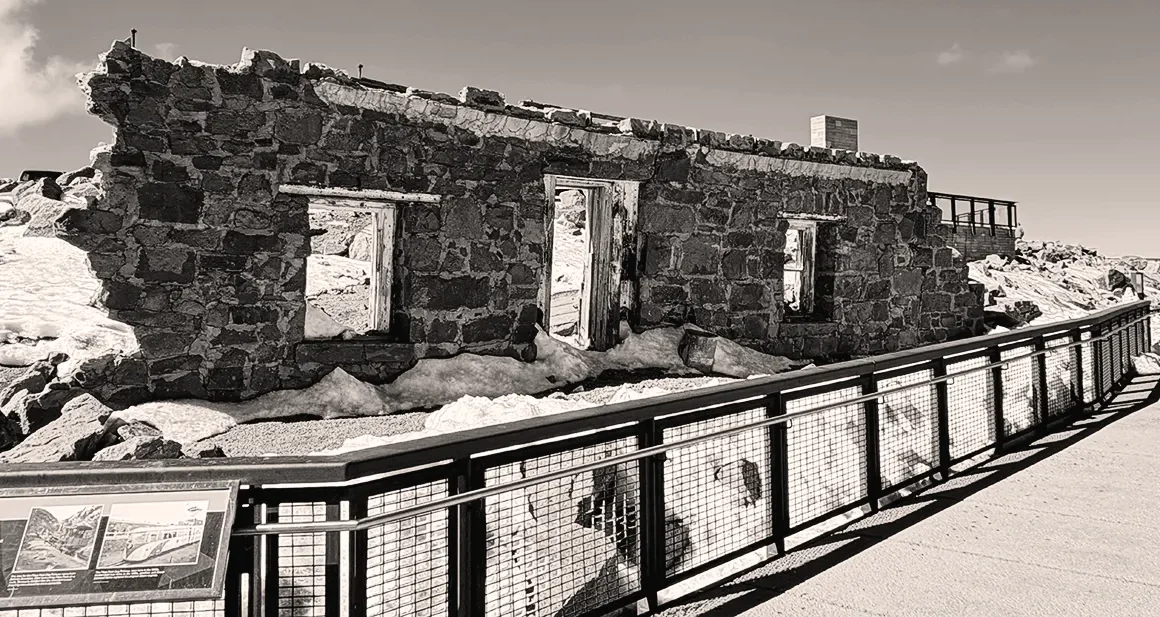
The History of Pikes Peak: Colorado’s Mountain of Big Views and Bigger Stories
The History of Pikes Peak: Colorado’s Mountain of Big Views and Bigger Stories
Rising 14,115 feet above Colorado Springs, Pikes Peak has been a landmark, a destination, a symbol, and a challenge for generations. Today, visitors can drive its highway, ride the Cog Railway, hike Barr Trail, or watch racers charge toward the summit. But the mountain’s story began long before roads, trains, cameras, or even the name Pikes Peak.
For us, standing at the summit after our drive up Pikes Peak Highway, it was easy to understand why this mountain has captured people’s imagination for so long. The view is enormous. The air is thin. And somehow, even with visitors all around, it still feels wild.
Before It Was Called Pikes Peak
The mountain was known to Indigenous people long before American explorers arrived. The Ute people called it Tava, meaning “Sun Mountain,” because it is among the first major landforms along Colorado’s Front Range to catch the morning sun.
The Arapaho also had a name for it: heey-otoyoo’, meaning “long mountain.” Those names matter. They remind us that Pikes Peak was not “discovered” in an empty landscape. It was already a meaningful part of the homeland, travel routes, stories, and seasonal life of Native people.
Zebulon Pike Saw It—But Never Reached the Summit
In 1806, U.S. Army lieutenant Zebulon Pike led an expedition through the newly acquired Louisiana Purchase territory. From the eastern plains of what is now Colorado, Pike saw the massive snow-covered mountain that would later bear his name. That winter, Pike and several members of his party attempted to climb it.
Deep snow, bitter cold, and limited supplies stopped them well below the summit. Pike later wrote that he believed no human being could have reached the top. He was wrong—but considering the conditions, it is hard not to give the man some credit for trying.
The First Recorded Summit
The first recorded non-Native ascent came in 1820, when botanist Dr. Edwin James and two companions from Major Stephen Long’s expedition reached the summit. For a time, the mountain was even called James Peak in his honor. It was an extraordinary accomplishment.
James made the climb without today’s trail systems, weather forecasts, layered clothing, hiking shoes, or a warm ride down the mountain afterward. His name lives on in the rare James’s pikas and other scientific work from the expedition, even though Pikes Peak became the name that stuck.
In 1858, Julia Archibald Holmes became the first recorded European American woman to reach the summit. She wore what was considered a very practical climbing outfit for the day: pants under a short dress. That may not sound unusual now, but it was a bold choice in 1858.
“Pikes Peak or Bust!”
In the late 1850s, gold discoveries in the region helped turn Pikes Peak into a national symbol of opportunity. “Pikes Peak or Bust!” became the rallying cry printed on wagons and signs as thousands of people headed west during the Colorado Gold Rush.
Many of those fortune seekers never actually made it to the mountain. Still, the name had become powerful enough to represent the entire region—and the hope of a new beginning.
The View That Inspired “America the Beautiful”
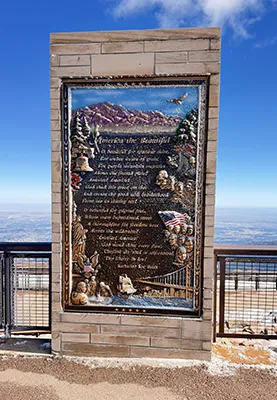 In 1893, writer and professor Katharine Lee Bates traveled to the summit by wagon and mule. The view across the plains, mountains, and sky made a lasting impression on her.
Her experience inspired the poem that became the lyrics to America the Beautiful. When you stand on Pikes Peak and look east across the wide-open plains—or west toward the rugged Rockies—it is easy to imagine why she was moved to write about “purple mountain majesties.”
That connection gives a visit to Pikes Peak an extra layer of meaning. You are not only taking in a Colorado view. You are standing in one of the places that inspired one of America’s best-known songs.
From Mules to the Cog Railway
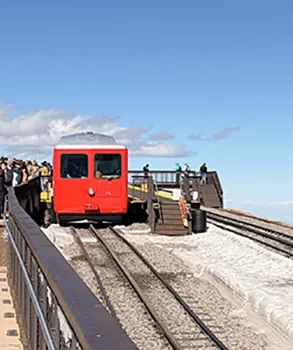 Before modern roads, visitors made their way toward the summit by trail and mule. Then, in 1891, the Manitou and Pikes Peak Cog Railway began carrying passengers from Manitou Springs to the top.
The Cog was a remarkable piece of mountain engineering. Instead of relying on ordinary train wheels alone, it used a toothed rack-and-pinion system to climb grades far steeper than a traditional railroad could handle.
More than a century later, the Cog Railway remains one of the most memorable ways to experience Pikes Peak. It is a good reminder that Colorado has always found interesting ways to get people into the mountains.
The Highway and the Race to the Clouds
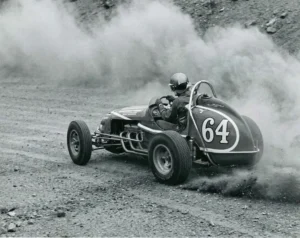
AI-Generated Historical Re-Creation
In the early 1900s, Colorado Springs entrepreneur Spencer Penrose saw Pikes Peak’s potential as a destination. He helped develop the Pikes Peak Highway, creating a route for automobiles to climb toward the summit.
Then, in 1916, he launched the Pikes Peak Auto Hill Climb—now known as The Broadmoor Pikes Peak International Hill Climb, or simply the Race to the Clouds. Drivers and riders race 12.42 miles, tackle 156 turns, and climb nearly 4,720 feet to the summit.
The race is one of the oldest automobile competitions in the United States, and it remains one of the most demanding. Pikes Peak has tested everything from homemade race cars to world-class electric vehicles, motorcycles, and legendary drivers.
Why Pikes Peak Still Matters
Pikes Peak is more than a summit photo, a bag of donuts, or a box checked on a Colorado trip. It holds layers of history: Indigenous heritage, exploration, science, gold-rush dreams, engineering, music, and motorsports.
It also reminds us that Colorado’s mountains deserve respect. Weather can change quickly. The summit’s high elevation can affect anyone. And the land carries stories that began long before any of us arrived.
Whether you drive up, ride the Cog, hike Barr Trail, or simply admire it from Colorado Springs, Pikes Peak is worth slowing down for. Take in the view. Learn a little of its story. Then keep on explorin’.
FRED SAYS: Pikes Peak is not just a drive to the top. It is a Colorado story written in stone, sky, rails, roads, and a whole lot of determined people.
Pikes Peak History FAQs
Did Zebulon Pike climb Pikes Peak?
Zebulon Pike saw the mountain in 1806 and attempted to climb it that winter, but he did not reach the summit.
Who first reached the summit of Pikes Peak?
The first recorded non-Native ascent was made in 1820 by Dr. Edwin James and two companions from Major Stephen Long’s expedition.
Why is Pikes Peak connected to “America the Beautiful”?
Katharine Lee Bates visited the summit in 1893, and the view inspired the poem that later became the lyrics to “America the Beautiful.”
When was the Pikes Peak Cog Railway built?
The Manitou and Pikes Peak Cog Railway began carrying passengers to the summit in 1891.
When did the Pikes Peak International Hill Climb begin?
The first race was held in 1916. It is widely known as the Race to the Clouds.